Surprising fact: many DeFi losses are not the result of stolen keys but of ‘blind signing’—approving complex on‑chain actions without a clear read on their effects. For power users who move assets across 90+ EVM chains, that opacity is the primary operational risk. Transaction simulation—running a dry‑run of a transaction and showing exact token movements and fees before signing—reduces that risk in a way simple UI warnings do not. This article explains the mechanism, demonstrates where it helps and where it doesn’t, and gives a decision framework for when a wallet with simulation and approval controls is worth adopting for US-based DeFi activity.
I’ll use Rabby as a running example because it pairs transaction simulation with portfolio aggregation, approval revocation, hardware integrations, and enterprise hooks — features that crystallize the trade-offs most DeFi power users face. The point is not to endorse a product uncritically but to show how the pieces fit together so you can evaluate wallets by mechanism, not marketing.
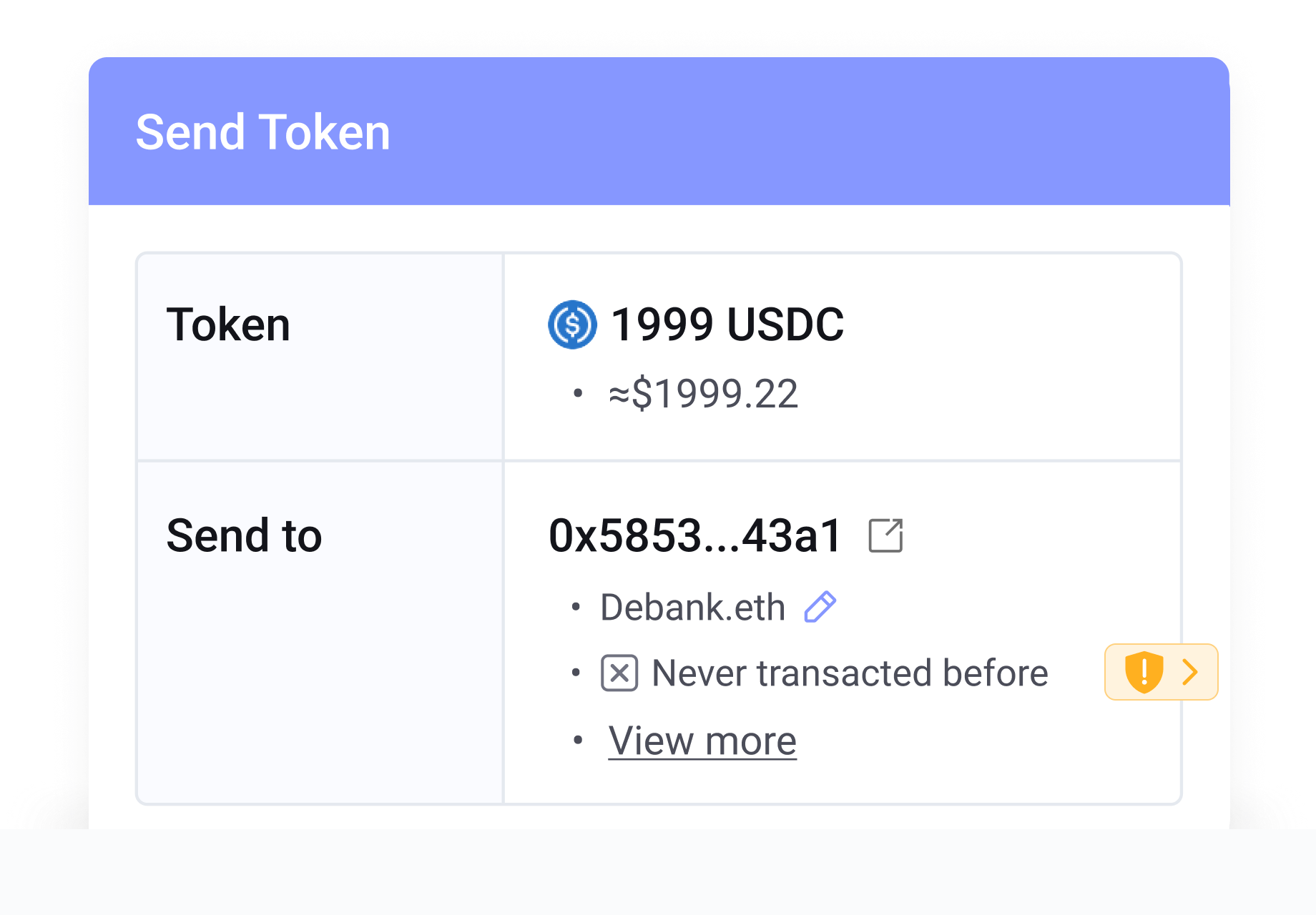
How transaction simulation works (mechanism, not magic)
At its core, simulation executes the intended transaction against a node or local EVM in a read‑only mode (eth_call or trace), using current on‑chain state but without writing a block. That returns the exact state transitions the transaction would cause: token transfers, contract state updates, and gas consumed. A wallet that runs this before signing compares the simulated outputs to the user’s intent and surfaces discrepancies—unexpected token drains, allowance changes, or third‑party transfers.
This is different from heuristics or black‑box risk scores. Simulation provides deterministic, stateful feedback: “If you sign, you will lose X tokens and pay Y gas.” It cannot, however, protect against certain attack classes: if the contract’s behavior depends on future on‑chain changes (e.g., time‑locked behavior) or oracle manipulation that can occur between simulation and inclusion in a block, the snapshot will not anticipate those dynamics. So simulation materially reduces but does not eliminate transactional risk.
Rabby as a case study: features that matter to power users
Rabby is a non‑custodial, open‑source wallet built by DeBank that stitches several mechanisms together in a way tailored for heavy DeFi users. Key elements include multi‑chain portfolio aggregation (tokens, NFTs, LP positions across >90 EVM chains), pre‑transaction risk scanning, transaction simulation with explicit balance deltas and fee estimates, and a built‑in approval revocation tool. It also integrates with hardware wallets and institutional tools like Gnosis Safe and Fireblocks—important for teams and users who need multi‑sig or custody assurances.
Why these features collectively matter: portfolio aggregation provides situational awareness (you know which chain holds what), simulation tells you what a candidate transaction will do to that portfolio, and revocation tools let you reduce long‑running exposures created by blanket approvals. Combined with hardware wallets, this forms a layered defense: visibility + predictive check + control + strong signing keys.
Trade-offs and limitations you need to weigh
No tool is a panacea. Rabby lacks an in‑wallet fiat on‑ramp and native staking interfaces—meaning you still need external services for buying on‑ramps or complex staking flows. Transaction simulation assumes the node’s view of the chain is accurate and timely; RPC outages, censored nodes, or stale state can produce misleading results. The 2022 Rabby Swap exploitation is a sober reminder: even wallets that simulate can be connected to flawed contracts. The team’s response—freezing the contract and compensating users—speaks to operational maturity, but it doesn’t make future smart contract risk disappear.
Another trade‑off is convenience versus strictness. Automatic network switching reduces friction but can mask the fact that a dApp on one chain looks similar to a malicious dApp on another. Power users must balance fast workflows with manual checkpoints: lean on simulation, but also selectively require hardware confirmations or multi‑sig thresholds for high‑value actions.
How to evaluate multi‑chain wallets: a practical rubric
Here is a decision‑useful checklist that turns features into choices:
– Simulation fidelity: Does the wallet display explicit token deltas and gas estimate derived from a reliable RPC or local node? If yes, it prevents many classes of blind signing.
– Approval management: Can you list and revoke ERC‑20 approvals in one place? Persistent allowances are a common attack vector; revocation is a first‑order defense.
– Chain coverage and gas tooling: Does it support the chains you use, and can you top up gas cross‑chain? If you move assets onto a new L2 or sidechain, cross‑chain gas top‑ups prevent surprising failed transactions.
– Hardware and enterprise compatibility: For teams or high‑net‑worth users, support for Ledger/Trezor and multi‑sig solutions is essential.
– Open‑source and audit posture: Open code and an active security program reduce but do not eliminate systemic risk. Past incidents should be judged by response quality as much as occurrence.
Decision heuristics: when to install a simulation‑capable wallet
If you regularly: (1) interact with complex DeFi contracts (AMMs, yield aggregators), (2) move assets across multiple EVM chains, or (3) maintain long‑lived approvals, simulation and revocation tools are high‑value. For casual HODLers who only receive tokens, a standard wallet may suffice. For US‑based traders and institutional users, the marginal benefit of reduced blind signing and integrated multi‑sig support often justifies adding a simulation‑first wallet to your toolset.
To evaluate setup cost: try importing an existing wallet, enable hardware signing for high‑value addresses, and use the ‘flip’ toggle where available to compare experiences with your current default (Rabby supports flipping between itself and MetaMask). That lets you test the workflow without committing permanently.
What to watch next
Monitor three signals that will change the calculus in the near term: (1) improvements in relay and RPC reliability—if simulations run against more decentralized, censorship‑resistant nodes their trustworthiness rises; (2) smarter contract standards for revocable approvals—token standards that make granular, time‑limited allowances easier would reduce exposure; (3) regulatory developments in the US around custody and wallet services—clarity could push more institutional integrations and formal audits. Each shift changes the relative value of wallet features.
For readers who want to explore a simulation‑forward wallet directly, see this page on rabby wallet which summarizes installation options and platform support.
FAQ
Does transaction simulation stop all scams?
No. Simulation reduces blind‑signing risk by showing expected state changes, but it cannot predict attacks that depend on future on‑chain manipulation, front‑running between simulation and inclusion in a block, or vulnerabilities in the target contract’s logic that only manifest under rare state conditions. Use simulation as a critical layer, not the final defense.
Can I use simulation with a hardware wallet?
Yes. The most secure workflow pairs simulation and offline signing: simulate the transaction in the wallet UI, review the exact deltas and fees, then approve the cryptographic signature on a hardware device. This combines visibility with key isolation and is recommended for high‑value operations.
How reliable are approval revocation tools?
Revocation tools let you cancel ERC‑20 allowances by sending a transaction that sets allowance to zero (or a minimal safe value). They work but cost gas and depend on the smart contract adhering to standard allowance patterns; some non‑standard token contracts or proxy patterns can complicate revocation. Always confirm the post‑revocation state via on‑chain explorers or the wallet’s portfolio view.
Should institutions trust a browser extension wallet?
Trust depends on architecture and controls. Browser extensions offer convenience but expand the attack surface. Institutions typically pair extension wallets with hardware signers, multi‑sig policies, and custody providers. Rabby’s integrations with Gnosis Safe and custody solutions make it more suitable for institutional workflows than an isolated extension alone.
Leave a Reply